Why Shoulder Season Travel Offers The Best Value At Any Destination
Most people plan travel around school holidays, long weekends, and peak summer months, which guarantees they pay the most money for the most crowded version of wherever they go.
Shoulder season flips that entirely. The prices drop, the crowds thin, and the places themselves often reveal qualities that peak season buries completely.
1. Accommodation Prices Drop Significantly And Immediately
Hotel pricing responds directly to occupancy levels. When demand falls at the end of peak season, properties reduce rates to maintain occupancy, and the reductions are not trivial.
A beachfront hotel in Santorini that charges $450 per night in August regularly drops to $180-$250 in October for the same room, the same view, and the same service standards.
In Bali, private pool villas in Seminyak and Ubud that peak at $350 to $450 per night in July and August frequently list at $150 to $220 in September and October, which marks the beginning of the dry season and offers some of the year's best weather. That is a saving of $200 per night per couple, which compounds rapidly over a 10-night trip into $2,000 in accommodation savings alone.
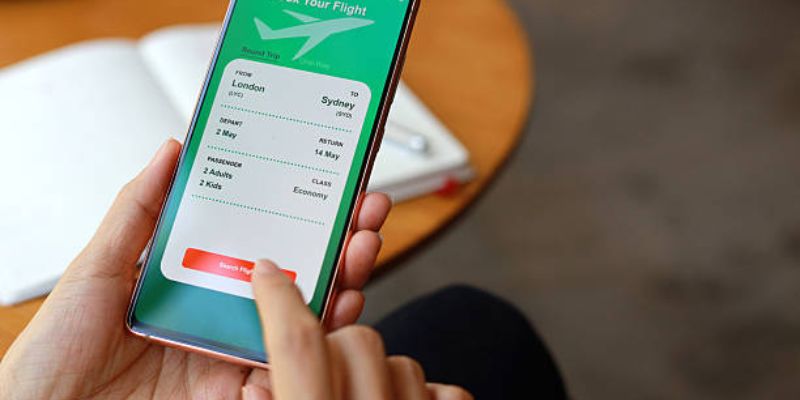
Airfare pricing patterns [1] follow a similar trajectory during the shoulder season. Domestic and international routes serving popular leisure destinations show consistent fare reductions of 15 to 30 percent in shoulder windows compared to peak weeks, which makes the total trip cost reduction even more significant when flights and accommodation savings are combined.

2. The Crowds Are Gone And The Experience Changes Entirely
Standing in a 45-minute queue to enter the Uffizi Gallery in Florence in August, surrounded by thousands of other tourists, is a fundamentally different experience from walking in with minimal wait in October.
Seeing the Amalfi Coast from a terrace in late September, when the tour buses have largely stopped running, is a genuinely different experience from navigating the same road in July, when every switchback is gridlocked.
This is not an exaggeration or a romantic notion. Overtourism at peak-season destinations has become severe enough that several major sites have introduced visitor caps and timed-entry systems precisely because the crowds were degrading the experience for everyone. Cinque Terre implemented daily visitor limits. Venice introduced a day-tripper fee. Amsterdam has actively discouraged peak season tourism through campaigns and accommodation restrictions.
Visiting these places during the shoulder season sidesteps most of those friction points and gives access to the actual place rather than a managed version surrounded by tens of thousands of other people.
3. Local Businesses Are More Attentive And Authentic
During peak season, restaurants, tour operators, and accommodation providers are running at maximum capacity and often beyond it. Service quality drops under that pressure regardless of how good the establishment normally is. Tables turn too fast, guides manage groups that are too large, and the version of local hospitality you experience is the exhausted, stretched version.
During shoulder-season travel, the same businesses can breathe. A restaurant in Porto in October is not turning tables every 45 minutes. A cooking class in Chiang Mai in May has eight participants instead of twenty-four. A guesthouse owner in Kotor in September has time to recommend the hiking trail that does not appear in any guidebook because he only mentions it to guests with whom he has actually had a conversation.
Those interactions are what most people say they seek when describing meaningful travel experiences. They are genuinely more available during the shoulder season, when the business model is not purely about throughput.
4. Weather Is Often As Good As Peak Season Claims
The weather argument for peak season is often overstated. July and August in Rome average 32 to 35 degrees Celsius with high humidity, which makes walking between sites uncomfortable for most people and genuinely unpleasant for many. May and October in Rome average 20 to 25 degrees, which is objectively better weather for exploring a city on foot all day.
The Maldives in May and June, technically early monsoon, experiences significantly more dramatic cloud formations and occasional rain showers, but the periods of clear water and warm temperatures between weather events are as beautiful as those in December through February. The dramatic light on an overcast Maldivian afternoon is different from the postcard-blue-sky version, but it is not worse and is often more interesting photographically.
Travel weather data [2] for most shoulder season windows shows conditions that are acceptable to excellent for the majority of a trip, with the occasional overcast day or afternoon shower that would not significantly diminish a well-planned itinerary.
5. Tour Availability And Quality Improve When Demand Is Lower
Premium tours, private guides, and specialized experiences that book out weeks or months in advance during peak season are often available with a few days' notice or less during shoulder season.
A private food tour in Bologna in August might require booking 6 weeks in advance and cost $180 per person. The same tour in October is bookable the night before at $120 per person with a guide who is not tired from running four tours per week since June.
Cooking classes, wine tastings, sailing day trips, photography tours, and cultural experiences across every category work this way. Shoulder season travelers get first pick of availability, lower prices, smaller groups, and guides who are enthusiastic rather than depleted.
The quality differential in guided experiences between peak and shoulder seasons is one of the most underappreciated advantages of deliberately timing travel.
6. You Save Money On Everything Else Too
The savings during shoulder-season travel extend well beyond flights and accommodation into almost every category of daily travel expenses. Rental car rates in southern European destinations drop by 30 to 50 percent in October compared to August. Boat rentals and water sports in Croatia cost significantly less in September than in July. Museum skip-the-line tickets, which sell at a premium during peak season because demand justifies the markup, are often unnecessary during shoulder season when standard entry lines move freely.
Restaurant pricing in tourist-heavy areas also follows demand. The prix fixe tourist menu that costs 35 euros per person in peak season at a restaurant on the Dubrovnik waterfront often drops to 22 to 25 euros in October when the establishment needs to attract every customer it can.
Consumer travel expenditure data consistently show that total per-day travel spending during the shoulder season runs 25 to 40 percent below equivalent peak-season trips to the same destinations, even when travelers maintain the same quality of accommodation and dining.
7. You Get More Meaningful Photographs And Memories
This one sounds subjective, but it has a practical dimension. The most frequently photographed locations in the world, the Eiffel Tower, the Colosseum, Machu Picchu, and Angkor Wat, are essentially impossible to photograph without crowds during peak season. Dedicated photographers frequently schedule visits for early morning to beat the crowds, only to find that the strategy everyone else is also using means the crowds arrive by 8 a.m. anyway.

Shoulder season shifts that calculus substantially. The Colosseum in October at 9 a.m. has a fraction of the visitor volume it sees in August. Angkor Wat in June, during the early monsoon season, has a genuinely eerie atmospheric quality in the morning light that peak-season sunshine does not. The photographs taken during shoulder season travel are different from the peak-season versions of the same places and are usually more interesting.
8. Locals Actually Interact With You As a Person
Peak-season tourist fatigue is real and visible in destinations that attract millions of visitors annually. Shop owners in Venice in August, locals in Dubrovnik in July, and residents of any heavily touristed city during its peak weeks develop a particular relationship with visitors that is transactional by necessity and, by exhaustion, occasionally hostile.
Shoulder season changes the dynamic. A town that has had six weeks of relative quiet since peak season ended is genuinely pleased to have visitors again. The restaurant owner who recommends a different dish than the one you ordered because he thinks you will prefer it, the local at the next table who notices your map and offers to explain the neighborhood, these interactions happen in shoulder season in ways that peak season volume makes structurally impossible.
Those encounters are part of what makes a trip memorable rather than merely expensive and crowded. Shoulder-season travel delivers them reliably, without any additional effort on the traveler's part.
Planning Your First Shoulder Season Trip
The practical starting point is identifying your destination, finding its peak season dates, and booking for the four to six weeks immediately before or after those dates. Set fare alerts on Google Flights for the target period, cross-reference hotel rates on Booking.com across peak and shoulder dates to quantify the savings, and book accommodation with free cancellation until you have confirmed your flights.
Santorini in early October, Kyoto in late November, Morocco in April, the Caribbean in late May, and Costa Rica in May or June. Each of these windows offers a version of an iconic destination that most travelers never see because they follow the crowd calendar without questioning it. Choose one destination, identify its shoulder window, and make the booking. The difference in what you pay and what you experience will make the approach permanent.
References
[1] Bureau of Transportation Statistics – https://www.bts.gov
[2] National Weather Service – https://www.weather.gov